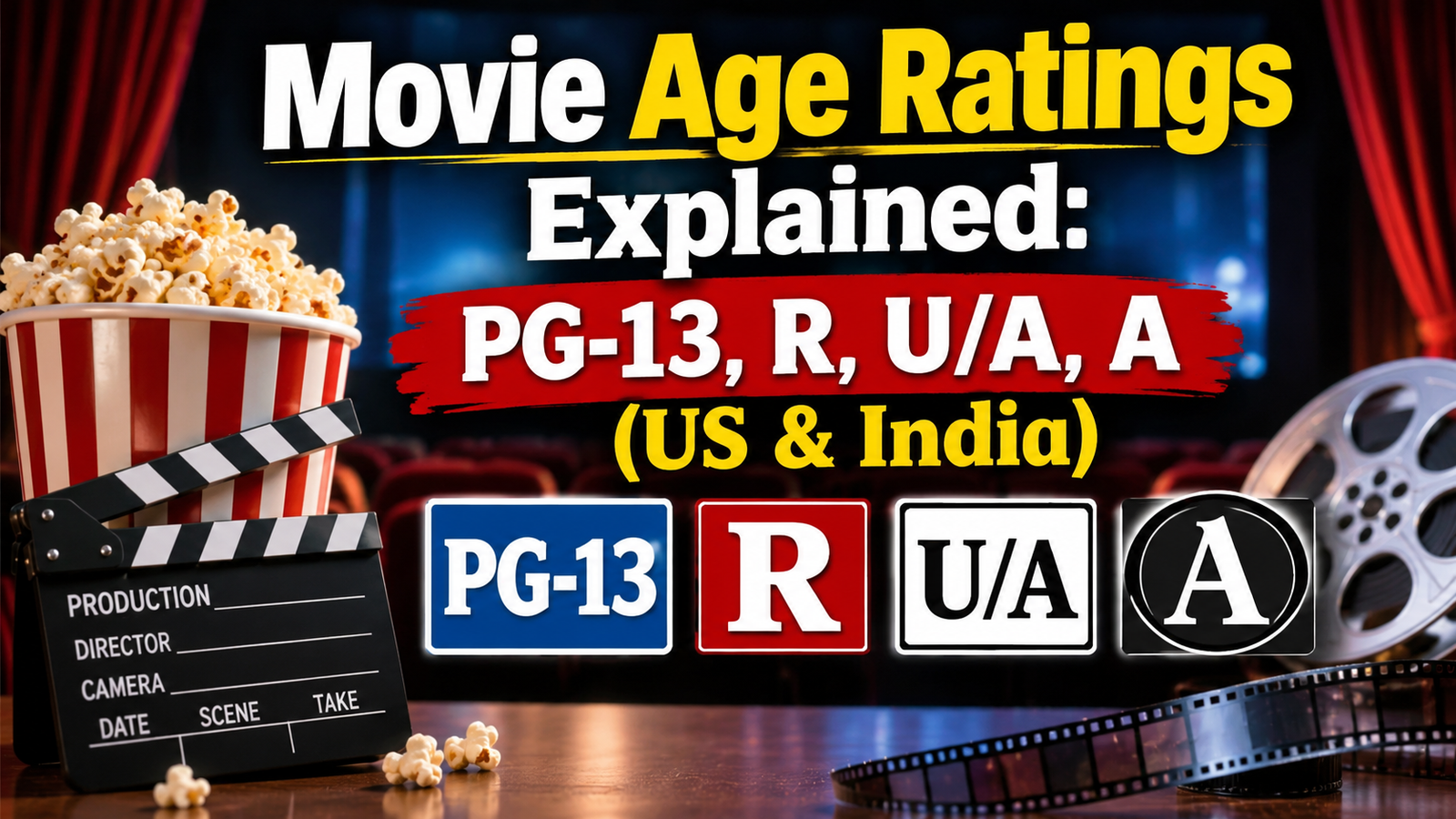
Movie age ratings explained in one line: they are labels that tell parents and viewers how suitable a film is for different ages. In the US you will see G, PG, PG-13, R and NC-17. In India, films carry U, UA 7+, UA 13+, UA 16+ or A certificates. The two systems look similar, but they work differently, and a film can wear a stricter label in one country than in the other.
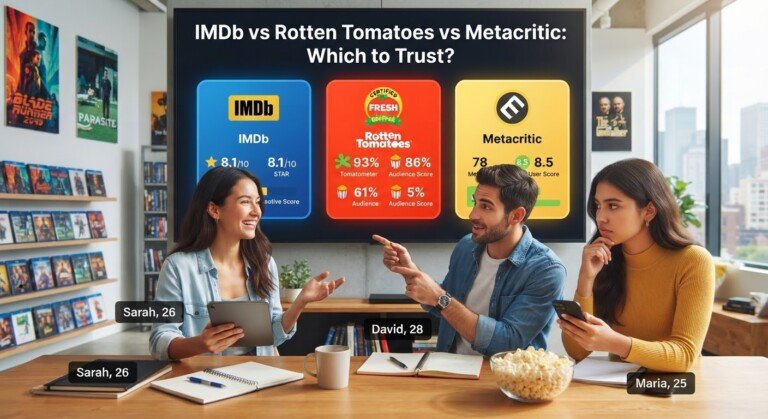
This guide explains what every label means, how the US and Indian systems roughly compare, and how to check a film properly before you press play with children in the room. It stays useful for any new release, because it is about how to read the labels, not about one title. If you want help judging quality instead of suitability, read our guide to IMDb vs Rotten Tomatoes vs Metacritic.
Movie age ratings explained: the short answer
- US: G is for everyone, PG means some material may not suit children, PG-13 means parents are strongly cautioned for children under 13, R means anyone under 17 needs a parent or adult guardian, and NC-17 means no one 17 or under is admitted.
- India: U is for all ages. UA 7+, UA 13+ and UA 16+ are open to everyone but advise parents to think twice for children below that age. A is for adults aged 18 and over.
- A rating is about content, not quality. A PG film can be weak, and an R film can be a masterpiece.
- Always read the short reason line next to the rating, not just the letters.
Why movie age ratings exist
Ratings exist so families can decide quickly whether a film’s violence, language, sexual content, drug use or frightening scenes suit a particular viewer. They are guidance, not a review. Different countries use different systems because they have different laws and cultural standards, which is why the same film can carry different labels depending on where you watch it.
US ratings: G, PG, PG-13, R and NC-17
In the United States, ratings come from the Motion Picture Association (MPA), an industry body. The system is voluntary, so it works as guidance rather than a law. Each rating is decided by a board of parents, and the MPA says the reason line printed beside it is an equal part of the rating.
G: General Audiences
All ages are admitted. Nothing in the film should trouble parents, so these are the safest picks for very young children.
PG: Parental Guidance Suggested
Some material may not be suitable for children. Expect mild scary scenes, light action or a little rude humour. Parents may want to watch with younger kids.
PG-13: Parents Strongly Cautioned
Some material may be inappropriate for children under 13. This rating was created in 1984 as a middle step between PG and R, and The Flamingo Kid was the first film to receive it. It covers a wide range, from gentle adventures to fairly intense action, so the reason line matters more here than anywhere else.
R: Restricted
Anyone under 17 requires an accompanying parent or adult guardian. R-rated films contain adult material, such as strong language, intense violence or sexual content, and parents are encouraged to learn more about the film before taking young children.
NC-17: Adults Only
No one 17 and under is admitted, even with a parent. It is rare, and it replaced the old X rating in 1990.
Look at the line beneath the rating, such as “for intense action violence and some language”. That short note tells you why a film earned its label, and it is far more useful than the letters alone.
India’s certificates: U, UA 7+, UA 13+, UA 16+ and A
Films shown in Indian cinemas are certified by the Central Board of Film Certification (CBFC), which works under the Ministry of Information and Broadcasting. Certification is required before public screening, which is a key difference from the voluntary US system.
- U: unrestricted public exhibition. Suitable for all age groups.
- UA 7+, UA 13+, UA 16+: unrestricted exhibition, with a caution that parents should consider whether a child below 7, 13 or 16 should watch. The age-based versions were introduced under the Cinematograph (Certification) Rules, 2024, replacing the single UA category you may remember.
- A: restricted to adults aged 18 and above.
- S: restricted to special groups such as doctors or scientists. You will rarely see it.
You will also see UA written as U/A. It means the same thing. The key point: a UA label is advice, while an A label is a real restriction.
US and Indian ratings compared
The two systems are not official equivalents, but this table shows how they roughly line up.
| US rating | India (rough match) | Best for |
|---|---|---|
| G | U | All ages |
| PG | UA 7+ | Kids with guidance |
| PG-13 | UA 13+ | Teens |
| R | UA 16+ or A | Older teens, adults |
| NC-17 | A | Adults only |
Treat this as a rule of thumb. Each board looks at different things, so the same film can land one step higher or lower in the other country.
TV shows and streaming ratings
US television uses its own labels: TV-Y, TV-Y7, TV-G, TV-PG, TV-14 and TV-MA. TV-14 means some content may be unsuitable for children under 14, and TV-MA is meant for mature audiences. Streaming apps usually show a maturity rating beside each title, and many let you set up profiles that block anything above a chosen level.
In India, streaming platforms classify their own content into the same five age bands used in cinemas: U, U/A 7+, U/A 13+, U/A 16+ and A. If you enjoy binge-watching, browse our Web Series section and check the label before you start.
What a rating does not tell you
- Quality. A rating says who the film is for, not whether it is good. For that, compare critic and audience scores.
- Exact content. Two PG-13 films can feel very different. One may have cartoonish fights, the other a tense, frightening finale.
- Context. Violence in a war drama feels different from violence in a superhero comedy, even if both land in the same band.
- Your child. Some 10-year-olds enjoy a PG-13 adventure, while others get scared by a PG film. You know your own child best.
- The version you watch. Cuts and edits for TV, streaming or another country can change what a film shows.
How to check a film before watching with children
- Note the rating and read the reason line beside it.
- Open the film’s Parents Guide page on IMDb. It breaks content into categories such as violence, language and frightening scenes.
- Check Common Sense Media for age suggestions and parent reviews.
- Watch the trailer first, and notice what scares or excites your child.
- Watch the film together the first time, so you can pause and talk if a scene feels too much.
Common myths about film ratings
- “PG-13 means safe for any 13-year-old.” Not exactly. It means parents are strongly cautioned for children under 13, and the final call is yours.
- “R-rated means a bad or explicit film.” Many serious dramas, war films and thrillers are rated R for intense themes, not for anything crude.
- “An A certificate in India always means explicit content.” It means the film is meant for adults, which can also be because of violence or heavy themes.
- “UA and A are almost the same.” They are not. UA is open to all with a caution, and A is restricted to adults.
Frequently asked questions
Is a PG-13 movie okay for a 12-year-old?
It can be, but it depends on the film and the child. PG-13 is a caution, not a ban. Read the reason line and the Parents Guide, then decide.
Can a child watch an R-rated movie with a parent?
Under the US rule, anyone under 17 needs an accompanying parent or adult guardian. Whether the film is appropriate for your child is still your decision.
What does UA 16+ mean?
It means the film can be shown to everyone, but parents are advised to consider carefully before letting a child below 16 watch it. It is a caution, not a ban.
Can a 17-year-old watch an A-certified film in India?
No. An A certificate restricts a film to adults aged 18 and over.
Do US ratings apply in India?
No. The MPA’s ratings are used only for American audiences, and every country has its own system. Indian cinemas follow the CBFC certificate instead.
Does a rating tell me if a movie is good?
No. It only tells you who the film is suitable for. Use review scores and written reviews to judge quality.
Final thoughts
Once you know the labels, a rating becomes a quick way to match a film to the people watching it. Read the letters, then the reason line, check a Parents Guide when children are involved, and trust your own judgement last. When you are ready to pick something to watch, browse our Movie Reviews, explore Hollywood and Bollywood picks, or head back to the Movies Reviews Hub homepage. If a title is stuck on the tip of your tongue, our guide on how to find a movie you forgot the name of can help.
Sources and further reading
- MPA Film Ratings (official site)
- Central Board of Film Certification (official site)
- Wikipedia: Central Board of Film Certification
- Common Sense Media
Rating rules and labels can change, so check the official sites if you need the exact current wording.